
Please Prosecute Me!
So I was part of this really crazy dog rescue and I got arrested...

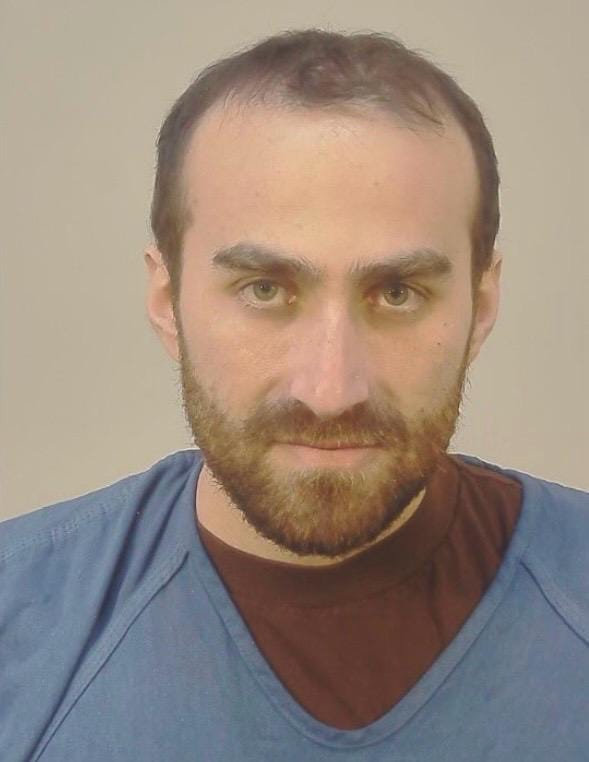
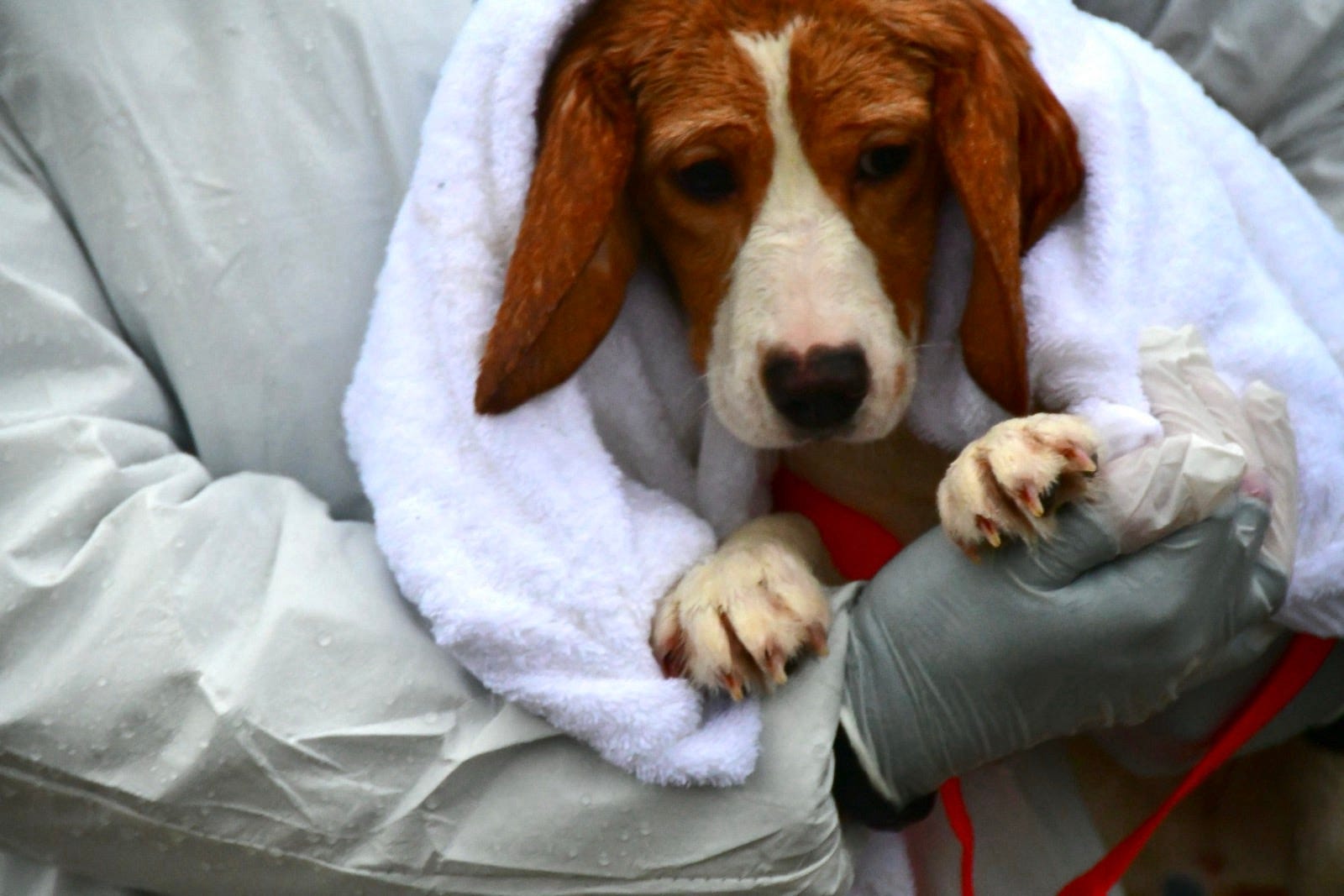
As some readers may know, on March 15 I was part of a massive dog rescue in Wisconsin. It was a mass nonviolent direction action, in the spirit of civil disobedience. It was really really intense. This is the true story of what happened.
Saturday, March 14
The simulation to prepare for the rescue was a cross between capture-the-flag and, amusingly, cops and robbers. The arena was the sizable public grounds surrounding the state capitol building. This felt like a statement on our part: we were not hiding. We were not ashamed. We were in the right, and we weren’t afraid to do this on government property.
Everyone took the simulation extremely seriously. There were 45 small stuffed animal dogs hidden on the grounds, and our teams would try to retrieve them. We were in the same teams we would be on the day of the action. Red teams would attempt to retrieve the animals, and yellow teams would help protect them. Some activists role played as security guards who could steal dogs back if they could tag the person holding the dogs. Some activists were cops, who could detain – freeze – entire groups of red team, until a yellow team came to unfreeze them.
Wayne gave us a mock briefing, telling each team which direction to go, and then we were off. Immediately, Dean – our team lead – began barking orders. Telling each member of team Greyhound where to stand, what to look for, what to do. “Abie,” he said, “lead from behind. Continue filming.”
I was our team’s co-lead, and I was supposed to help with videography too. I tried to hold my phone’s camera steady as I walked. It was not easy to capture good footage. After each 30 second clip, I was supposed to upload it to the group chat, since in the actual action I could get arrested and my phone taken.
It sounds easy to walk and film, but in reality, it was chaotic. My team kept dispersing, searching for dogs, asking questions and giving comments, and Dean barked orders as he received new info on his walkie talkie. Only team leads had these, to coordinate with the mysterious Action Marshal. We were supposed to keep the identity of the Action Marshal secret, so he would not be arrested early, but everyone knew it was Wayne.
The chaos became worse when we actually found stuffed animal dogs and tried to escort them back. I had to jog ahead to get good shots of my team carrying the dogs, but security kept interfering. Yellow team proved their worth, shielding dog carriers with their bodies, protecting them from security, but then cops came. I tried to reason with the cops, explain about the animal abuse, but they just shouted “not interested!” and moved past us or detained us. All of this later turned out to be shockingly accurate to the actual action.
After the simulation, our team debriefed. Dean asked us each to rate on a scale of 1-5 how our team did. Most people said 2.5. I did too, but in my head I thought this was generous. As a team, we had failed to stay together and failed to coordinate. Our team was not the most fit, and multiple people had fallen or exhausted themselves by running. We had rescued far fewer dogs than we should have. On my end, none of the footage I had taken was any good. I had gotten a new phone in case it was taken by the cops, and I hadn’t yet done some obvious things like enable Google Maps to use my location, or enable Signal to access photos. It had been clunky, and none of the footage I had taken had been any good. Worse, I hadn’t done anything as a leader. It was all just so chaotic.
Morale was low that night. Although most of the team didn’t know it, this night was our last chance to prepare. Dean and I discussed strategy. We tried to figure out what had gone wrong, and how we could fix it. We decided to keep the team in a tight formation, with me in the back, taking on more of a leadership role than the initial videography role I had planned for. We borrowed a mantra from the Navy Seals: slow is smooth, smooth is fast. We would not run. We would walk, at a consistent pace, in formation. We would use direct communication, and minimize unnecessary chatter.
After more briefing that night, our team decided that it would be best to take a break from discussing the action, to give everyone a chance to chill. We put on a five minute timer, during which we would not talk about the action.
We literally could not make it five minutes. People had thoughts and questions, and I was part of the problem. But what else would we talk about? We were seven strangers, come together for this one purpose, and it was all I could think about.
One of our team members led a guided meditation. Usually I find that kind of thing silly, but that night it was extremely helpful. I was so incredibly stressed. Even after the meditation I was incredibly stressed, but it seemed more manageable.
After running through an equipment check, Dean led us through an exercise. “Close your eyes,” he said. We did. I squinted and saw the documentarian that had been following our team was there, focusing the camera on each of our faces in turn. If nothing else, this would make a crazy story. I shut my eyes completely.
“We’re approaching the fence,” Dean said. “Stay in formation.”
Still with all our eyes closed, Dean led us through a roleplay of the entire action. He called for tool users to use tools on the doors, and they responded. He called for our support to interface with security, leveraging imaginary yellow team members to help. We walked through the entire action, each of us playing our roles, and responding in the roleplay. I was later told it was similar to Dungeons and Dragons.
I don’t know how Dean came up with this exercise – if it was something he’d done before, or if he made it up in that moment. Regardless, it helped. It let us practice our roles, and it made the whole action seem so possible.
Still, I slept very poorly that night.
Sunday, March 15
Did they know we were coming today? It seemed so obvious to me. Even if they didn’t have an infiltrator who had worked their way into the circle of people who knew about it, surely they could puzzle it out. Why would we wait for Monday, the publicly announced date?
The van took us to a random parking lot. It was early in the morning, and the kind of cold you don’t get in California. Overcast, but it was supposed to start snowing in an hour. Dean gathered us around as we put on our Tykev suits.
“As you may have guessed,” he said, “this is not a mock briefing. This is the actual briefing. The action is today. We are prepared, and we are going to rescue dogs. Let’s suit up.”
I looked around. I knew for a fact not everyone had known that today was the day, but no one reacted. We knew our role was to follow Dean’s instructions, and to not add unnecessary chatter.
Tyvek suits on, tools at the ready, we returned to the van, to rendezvous with the other vans at a nearby mall. I was giving directions from my new phone – my normal phone was safely at home. I was laser focused on the directions – this had to be efficient and professional. I didn’t want to make any wrong turns.
“Hey Dean?” one of our team members said. “There’s a cop right behind us.”
I looked over. There was, and it looked like the cop had pulled onto the highway from the side of the road. Like they had been waiting for us. It was one lane over and to the left. Holy shit. This action was so screwed.
Dean asked our driver: “Are you certain that the police vehicle is following us?”
Seemingly unstressed, our driver replied: “No.”
“But it might be following us?”
“Yes.”
“Okay,” Dean said. “Take the next right and try to lose – actually, disregard my instructions and follow your training.”
We were so fucked. The van kept moving at the maddeningly slow speed limit of 25. In fact, we never went above the speed limit. It made some sense: if we got pulled over, it would be the world’s most interesting traffic stop: a dozen people in Tyvek suits, some holding power tools. What a disaster that would be.
I didn’t say anything, because I didn’t have anything to contribute. There was a strange comfort in the chain of command – it didn’t matter if I had any ideas, because it wasn’t my place to say them. There was nothing I could do. I was locked in, and the pieces would fall as they would.
“Cop no longer following,” our driver said.
Everyone in the car looked, and it was true. The cop was no longer following. It must not have been there for us. I breathed a sigh of relief. It wasn’t over – the action hadn’t even truly started – but perhaps the most stressful moment had passed.
~
We met up with the other vans, tailed Wayne’s van onto the highway. I followed along on my phone as the distance to Ridglan narrowed. The waiting was intolerable – I wanted everything to happen already. I had the thought that this was an iconic moment in my life, one I would look back on with… regret? Nostalgia? Joy? I couldn’t say.
As we grew closer, the landscape and roads became familiar from all my map study. I pointed out the Nursery as we drove past, mentioned how we were on Blue Mounds Road, to the north of the farm. The vans pulled over on the side of that wide road and we disembarked.
We took a moment to gather our bearings. Slow is smooth, smooth is fast.
“Greyhound, with me!” Dean said. “Follow Wayne’s team.”
It was maybe a forty yard trek through a field to the corner of the fence surrounding Ridglan. When we got there, there was a massive hole in the fence. We hadn’t even seen it happen. We strode through the breach without stopping.
We encountered no resistance on the way in. I helped Dean direct our team to the door of the building we would try to enter. I felt no emotions – I was in the zone, laser focused. My emotions were perfectly bottled up, though I would pay for that later, feeling the stress even weeks after.
The dogs were howling. Hundreds, maybe thousands. Not all at once, but enough that there was always someone crying out in pain, crying out for help. I have a dog. I know what a happy dog sounds like. A happy dog does not make much noise. These were dogs that were deeply unhappy.
Dean must have been getting instructions on where to go, because he directed us straight to a particular door. The tools came out and the team got to work. There wasn’t much for me to do except watch.
And watch.
And watch.
Because the door was not opening. One of our team members had experience as an EMT/firefighter, and he knew how to get through doors. Except it still wasn’t working.
“They’ve welded it shut,” he said. Behind the door, we were beginning to catch glimpses of another line of defense: some sort of metal grate that looked impenetrable.
I was concerned, but rather than channel that concern into an emotion like fear, I thought about it logically. How could I contribute?
“Dean?” I said, “I can go back and grab another tool if that would help.”
“Yes, go,” Dean said. “But Abie? Don’t run the whole way. Conserve your energy.” He seemed to have a very different idea than me of how long we would be allowed to do this sort of thing.
I conserved my energy. Thankfully, I was in good shape, having been working out regularly for the last two years. I jogged most of the way, but forced myself to follow Dean’s advice and walk too. The dogs howled.
When I returned a couple minutes later, there was still no progress on the door. Nor was Alexandra’s nearby team having any luck. The new tool I’d brought, a second crowbar, didn’t seem to be helping either. This would truly be the worst stage to fail in. To enter the property, damage the facility, and not have a single dog to show for it.
Despite the best efforts of my team, the door did not budge. But then, calmly, Dean instructed us to walk to another building. I didn’t ask for clarification, because I didn’t want to add unnecessary chatter, but I had a strong suspicion: someone had found a way in.
Sure enough, when we got to the other building, there was a flurry of activity. The door was open and red team members were filing in with cameras and out with dogs. A window was open – I later learned that this was the vent that Wayne himself had smashed open in one hit with a hammer. Then someone had gone through the window and opened the door from within. We had found the one weak point in Ridglan’s fortress – if it hadn’t been for this one window, the whole action would have been a failure.
There wasn’t time to think. Our team put on our Tyvek booties, to prevent our boots from contaminating the facility, and in we went. I tried to film as my team lifted dogs out of cages, but I didn’t get anything great. It was too chaotic. I tried not to focus on the cries of the dogs, how horribly small the cages were, how they were made of metal, metal and wire and nothing soft, like something out of a horror movie.
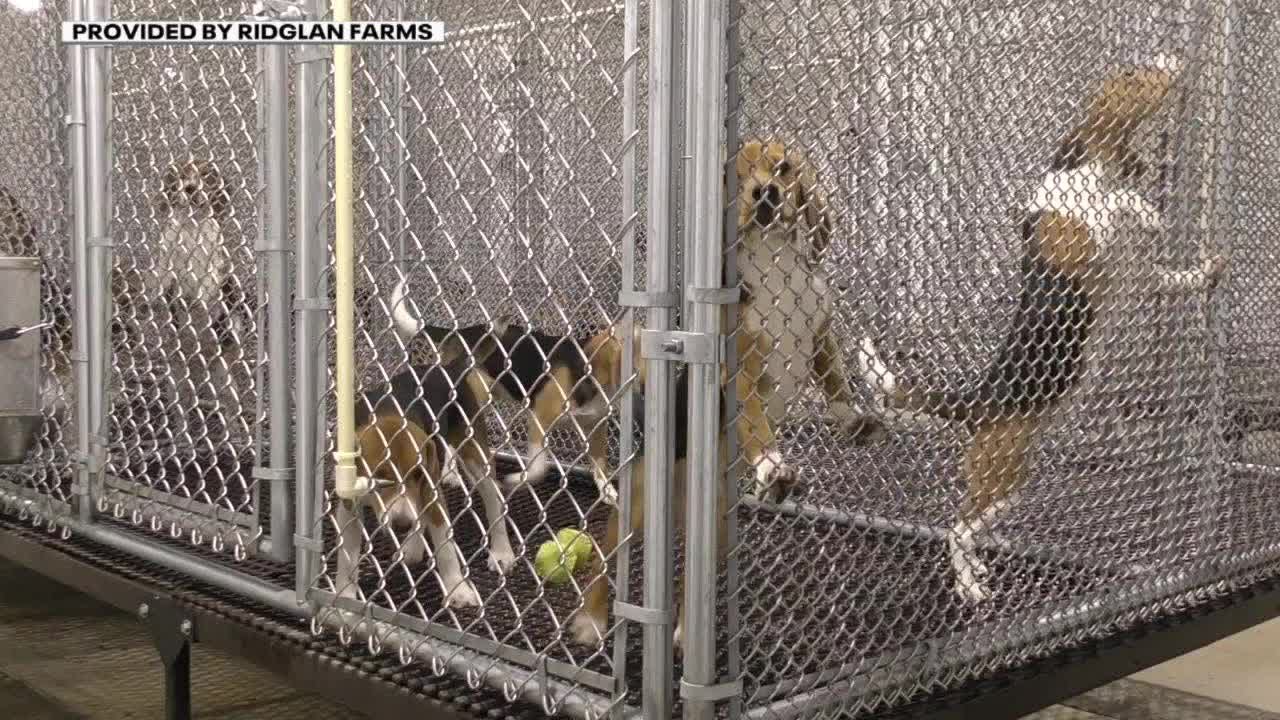
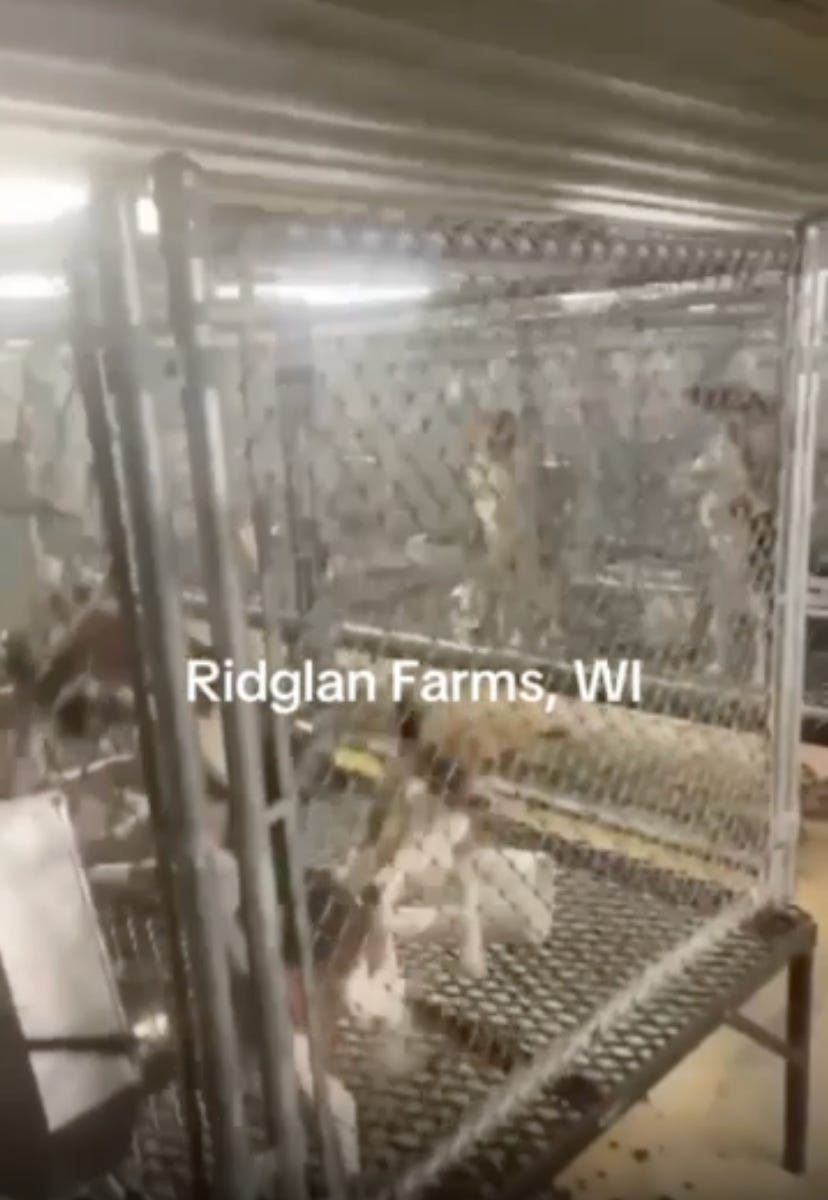
When we exited the building, the scene was pure chaos.
I was busy uploading my videos to the cloud in case my phone was seized and taking off my booties so I wouldn’t slip, so it took a bit to process everything that was going on. I saw it on my phone first: a text to the action groupchat: The cops are here. Vans with dogs need to leave NOW!
At this point, not a single dog had made it to a van.
Thunder boomed, the relatively clear air turning to nasty weather right on schedule.
And the cops were here right now, already on the property, less than twenty feet from us. I saw it clearly in a flash of lightning: they were holding Wayne, cuffing his hands behind his back. Our fearless leader, down for the count, and there were sirens and lights as more police cars sped up Blue Mounds Road.
~
I didn’t personally witness some of the events I’m about to describe, but I’ve watched the footage, and heard the stories from activists after the fact. Here’s some of what happened. All events are true. Although I cannot speak to anyone’s state of mind with certainty, I’ve done my best to guess.
Pete trudged up the hill. Conditions were treacherous, and it would be easy to slip, but Pete was tall and strong and he could make it. The problem was the dog in his arms. The dog wasn’t trying to bite him – it was a beagle, a breed that is especially sweet and docile, which was why they used them for their horrible experiments, since beagles almost never fought back. But the dog was nervous, or perhaps excited. He kept squirming in Pete’s grip.
Pete had always had an affinity for beagles. His first dog had been a beagle named Tracker, back when Pete was a little kid. Tracker was the first creature he remembered falling in love with.
Now, rain falling, beagle squirming in his arms, Pete was overcome with emotion.
“Easy, Tracker,” he said.
Maybe it was some cosmic resonance with the name, or maybe it was that Pete was calming himself as much as the dog, and the dog could sense it. Regardless, it worked. The dog – Tracker – stopped squirming, and remained docile all the way to the getaway van.
~
Derek stood in front of the building, dog in his arms, facing down a police officer. The cop stood right in front of him. “Where do you think you’re going!” the cop shouted.
Derek froze. What was he supposed to do? The trainings had always been a bit unclear on this. You weren’t supposed to fight cops, that was for sure, and you weren’t supposed to actively physically resist arrest, but were you supposed to obey their commands? He wasn’t sure. He could try to run, try to juke around the officer, but there was no way that would be successful, not in these conditions, not with him having to hold a dog the whole time.
He stayed in place. It was all falling apart. This dog would be returned back to the cages, to a life of torture, because he couldn’t figure out what to do –
Suddenly, screams tore through the stormy air.
Derek and the cop turned. It was Wayne: yelling at the top of his lungs, hands cuffed behind his back, multiple officers standing around him less than a dozen yards away. The officer in front of Derek turned and began heading towards Wayne.
Immediately, Derek seized upon the distraction Wayne had created. He moved, and kept going, walked right past the cop facing the other way, making his way to the field and to the vans.
~
Jerry was not having a good morning. For starters, the weather was not great. What had seemed like clear air had turned to hail, then to sleet, which was in some ways the worst of what Wisconsin had to offer. And if the weather reports were to be believed, it would only worsen from here, turning into a massive snowstorm in the coming days.
But this wasn’t what had Jerry so upset. He was used to Wisconsin weather, after all. No, what had Jerry so angry was the fact that what seemed like a hundred people were invading his family’s farm.
Dozens of them streamed up the hill, carrying away his father-in-law’s property in their arms. In their twisted narrative, they probably thought they were heroes rather than petty thieves. These people had been targeting Jerry’s family for almost a decade now, sending them threatening messages, harassing them with lawsuits, even forcing their breeding license into jeopardy.
And then this, this massive raid on the farm. Hsiung, their criminal leader, had brazenly announced it in advance. Jerry’s family had taken this threat seriously – these so-called-activists were insane, and clearly did not hesitate to break the law. Ridglan had reinforced the gates, reinforced the doors to the barns, and notified the police and the FBI. But it still wasn’t enough. The feds had ignored them, the criminals had come a day early and had somehow found a way in after causing who knows how much property damage, and while some cops were here now, they had never believed Ridglan about the gravity of the situation, and now there weren’t nearly enough cops to stop all the criminals.
Jerry had to take matters into his own hands.
He went straight to the gap in the fence that the criminal had caught. Reaching out with both hands, he dragged the gap closed, blocking it with his body. If the criminals wanted to get their stolen property out, they would have to go through Jerry. He wasn’t scared. He was a big guy – let them try to get past him.
“Not today, motherfuckers!” he yelled.
The criminals merely changed course, flowing through another hole in the fence.
Shit.
Jerry grabbed a baseball bat from his truck, and slid it into the fence, using it to keep the gap closed. There were too many criminals and only one of him, but he had to do what he could to defend the farm.
Jerry hopped back into his pickup truck, not even noticing as one of the trespassers simply removed the baseball bat from the fence, reopening the gap.
Jerry wasn’t stupid. He wouldn’t hit any of the criminals with the truck. That was just what they wanted — to paint him as the bad guy. Plus, even if they were criminals, they were still humans, and he didn’t want to inflict pain on them. But if they were going to play dirty, so would he. He sped up, driving right by some of the criminals, forcing them to jump out of the way. He did donuts around them, frightening them and spraying dirt into their faces.
The criminals continued on up the hill.
The strategy wasn’t working. There were simply too many of them, and they were too brazen. Jerry would have to stop them in some other way. He drove up to Blue Mounds Road, parked his truck perpendicular to the road, blocking anyone from leaving that direction. The street was full of activity, criminals loading dogs into several vans with tinted windows, a few cops failing to control the situation.
Jerry unfolded the knife he often carried with him, its blade five inches long. He approached one of the vans, shoving criminals out of his way when they tried to stop him. He didn’t use the knife on them, of course. But if they were willing to escalate, to cause property damage, then why shouldn’t he?
With one thrust, he used the knife to puncture the wheel of one of the vans, striding around to puncture two more of its wheels. Criminals called out to him, trying to stop him, but he ignored them, returning to his truck. One of the vans tried to get away, to move around in front of his truck, and he moved forward to block it. But as he moved forward, another van moved behind him, trying to sneak around.
Jerry shifted into reverse and slammed the gas. The pickup lurched backwards and slammed into the van, the collision causing both vehicles to almost bounce away from each other. Somehow, the van continued on its way despite the hit it had just taken, escaping to the highway.
Jerry swore in frustration. This was more than not a good morning. This was a disaster.
~
His life, up until this point, had been deeply wrong. He didn’t have the words to describe it, of course. He wasn’t sure what life was supposed to be, but it wasn’t this: endless pain and tiny circles in his cage and endless howling and the smell of fear and pain, and when he couldn’t bear it any longer it just kept going, and he ran in circles until his paws bled and threw himself against the side of his cage but there was no way out, and it just kept on going, day after day after day of pain and horror and wrongness.
Until today, a human had come and removed Tracker from his cage.
This human wasn’t like the others, the ones who only lifted Tracker from his cage to inflict pain and swiftly return him. This human murmured to him, and his hands were kind. This human pet Tracker. It was the first time Tracker had ever been pet.
He could smell the fear on the human, the adrenaline, and it made Tracker nervous. It was the first time he had ever seen the sky, and he didn’t ever want to lose it. But the human pet him and whispered to him, and together they calmed down.
The future was uncertain, but surely it had to be better than what had come before.
~
Team Greyhound made its way up the hill to the road. We walked right past the cops, who didn’t bother to even speak to us. There were dozens of us, and only a few of them, and they had other priorities.
I didn’t carry a dog myself, but I helped physically boost a team member who carried a dog up the hill. I lost track of Dean for a while – he had received a dog from a woman who was physically giving out, and he carried that dog to safety. In the meantime, I was in charge.
I jogged ahead of the group to see what was up with the vans. The scene was chaotic beyond anything I’d ever seen in person. One van had its tires slashed. Another was mired in the mud at the side of the road. A third was beset by two officers who seized a transport crate carrying a rescued dog, and brought it to their police car. Activists screamed at the cop: “Don’t you want the dog to be saved?” “They criminally abuse dogs here!”
“We have the legal right to rescue these dogs!” I tried, showing the cop the papers I carried that showed as much.
“Not talking!” she said, not even looking at me. Just like the cops in the simulation.
I focused on what I could contribute: I determined which van had the ability to take more dogs, and directed rescuers to that van. I helped push the mired van out of the mud.
Further down the road, yellow team members ran to block an angry man in a pickup truck. They held white flowers in one hand and peace signs in the other, and they stood in front of the truck to prevent it from moving forward. The truck revved aggressively, shooting forward a foot at a time.
It looked horribly dangerous, but it also looked like yellow team had it under control. (The police didn’t seem to be helping – they were either unaware or more concerned about thwarting the rescue.)
Red team members, including Greyhound, grouped together. There were maybe 20 of us. Dean was suddenly there along with Alexandra. Alexandra was the face of the whole operation, because she was an experienced activist, open rescuer, a good leader, and somewhat famous from her role in Baywatch.
They announced that we were going back in. This seemed a bit crazy to me, since by now cops were swarming all over. It seemed like begging to get arrested. Then I remembered that we were, in fact, planning to get arrested.
We went back in.
A security guard followed us. He didn’t physically touch us, but he yelled at us the entire way: “You don’t want to do this! These dogs cure cancer!”
It was just like the security guards in the simulation. I didn’t know where he had come from – had he just shown up, or had he been around the whole time but occupied with other things?
We made it back to the building with the open window, but we couldn’t go any further, because the security guard and cops stood physically blocking every entrance. But we didn’t back down either. We began chanting: “Save the dogs! Save the dogs!”
It was one of the most intense moments of the day. The cops were yelling at us, clearly on edge. They wanted to deescalate, and they didn’t know if we would remain nonviolent.
I didn’t see it myself, but around this time, one activist – Aditya – jumped through the open window in full view of the cops, grabbed a dog, and ran out another door. He was caught and detained, and the dog was returned to the cage.
The cops asked me for my name. I gave it. It was an open rescue after all. Eventually, they ID’ed all of us.
Things started calming down at this point. It was still cold and raining, but the sky felt a bit brighter. The cops had realized we weren’t violent, and we had realized there was no way for us to get into the building at this point.
The cops wanted us to get off the property as soon as possible. “If you walk off right now,” they said, “We won’t charge you with anything.”
It seemed like a good deal. Get in, get dogs out, and go home free?
Dean led a chant: “We are here to save the dogs! We are here to save the dogs!”
The vast majority of us stayed.
A text came in: Two of the vans have been detained.
I tried not to panic. I had no way to control what happened to the vans. It was out of my hands now. I didn’t tell everyone around me, because what would be the point? But I couldn’t stop thinking about how sad it would be if our mission failed. How embarrassing it would be to not get any dogs out. And worse, far worse, how sad it would be for those poor dogs. I was feeling increasingly emotionally connected to the dogs, being there and seeing their cages and hearing their cries for help.
I didn’t know it at the time, but cops wound up seizing eight of the dogs and returning them to Ridglan. Tracker was one of these dogs, and to this day, he continues to be inside a cage at Ridglan.
We talked with a few of the cops. They wanted to know why we were here, what our goal had been. “To save the dogs,” we replied.
At this point, the cops understood that we were activists, that we wanted to get charged as a matter of strategy and theory of change. They offered us a new deal: “Here’s the situation. We can cite you for trespass now, and you can leave and go home, or we can keep standing in the rain for a while, then handcuff you, bring you to the jail, and cite and release you there. But you would have the exact same citation either way. You can all have your court date together either way. So wouldn’t it be better to just get cited now, and you can go home?”
This sounded reasonable. Neither we nor the cops wanted to stand here in the rain and cold, and we would get our legal situation either way. We looked to Alexandra to make the call.
“I’m not comfortable leaving like that unless we get the okay from Wayne,” she said.
“Fine,” said the cops, and it was agreed that they would take her to where Wayne was detained to hear what he had to say and report back. Alexandra was walked away by a police escort.
She never returned.
The cops again offered us the deal: get cited now, or get cited at the jail. They didn’t demand an answer right away. They were giving us time to think about it.
A new text came in: 22 dogs made it to the secure drop off point.
We announced this to the group, and everyone cheered. We had done it – we had saved 22 dogs from this hellscape! Even the cops smiled.
In the buildings beside us, the dogs continued to wail.
~
After a while, it became clear that Alexandra wasn’t coming back. Leadership fell to Dean. The cops again offered us the deal: keep standing in the rain, get arrested, and get cited, or get the exact same citation now and go home and get warm. They didn’t demand an answer, but offered the deal several times. I was strongly considering it – we were all cold and wet and tired, and we’d be given our court date either way.
“Gather round,” Dean said, motioning all us activists into a little huddle. The cops didn’t seem to mind. “Here’s what is happening: the cops are trying to wait us out. They want us to leave on our own, because it’s easier if we go than if we stay. But our priority is not to save law enforcement resources. Our priority is to help the dogs, and if law enforcement has to exhaust unnecessary resources to stop us, then so be it. If the government’s decision is to spend money to support animal cruelty and allow dogs to be tortured, then so be it. I know we are all tired and cold and rain-soaked; but we came here for a reason. We came here for the dogs. We signed on to this to get arrested for the dogs. The cops left us out here in the rain because they think that we will give up and go home. That’s why they are taking so long. But how can I go home to a warm bed when these dogs probably never get to even be warm? I know that I’m staying. These dogs are in these tiny cages for most of their lives. If we were in a tiny cage, we wouldn’t want someone to give up on us, so we won’t give up on them.”
We all nodded.
We were staying.
~
The hail turned to snow and the snow turned to sleet and the sleet turned to rain and the rain turned to a drizzle. Now that tension had deescalated, the cops were happy to talk with us. It was very friendly. We chatted about random things, made jokes, and even did squats with the cops to stay warm. We sang some songs, and at one point I made a cop laugh by suggesting we sing Who Let the Dogs Out.
We talked about the dogs, of course. Multiple officers mentioned how they had dogs at home. One said “I’m in my official capacity now, which means I can’t say what I might in my private capacity, which would be something like: yeah, this place sucks.”
I asked the officers if they would rescue the dogs. We explained how Ridglan had countless animal cruelty law violations. The officers said they didn’t have a warrant. I explained how Wisconsin’s exigent circumstances exception allows an officer to enter without a warrant if they believe an animal is actively suffering. The officers said they didn’t have probable cause to believe that. I showed them a judge’s finding that there was probable cause to believe there were criminal violations. On top of that, I said, “Go look through the open window right there and look at the cages. That’s more than enough probable cause.”
The officers refused to look, despite the window being within plain view from where they were standing. “We can’t do anything about the dogs now,” the officers said. “We are just following orders – it would be the call of our supervisors.”
“Can we call your supervisors and ask them, then?” I asked.
I didn’t get an answer.
~
After a few hours, enough reinforcements arrived for the cops to arrest us. I was handcuffed with zip ties. It was all very collaborative.
I was placed in the back of a squad car. The seats were hard plastic, and my hands chaffed a bit. I don’t want to exaggerate the harm though – the police were friendly, and it wasn’t particularly painful. Mostly I was cold, wet, and hungry.
I spent at least two hours in that car. 45 minute drive to the jail, and then, in the jail, there were so many of us arrested (27!) that they didn’t know where to put us or how to efficiently process us, so they left us in the cars for over an hour.
In the squad car with me was Jennifer, another red team member. We’d seen each other around in the last couple days but never spoken. We chatted for hours. It was a remarkable social setting to bond with someone. The Third Space is the back of a squad car. No phones, no distractions. A camera pointed at us, so to play it safe we didn’t debrief the rescue. We talked about our lives, we talked about animal rights broadly, and we played 20 questions to pass the hours by.
Eventually, the jail got through to process us. Jennifer and I were separated. They asked me my info, and I gave it to them. They patted me down and x-ray scanned me. They had me change out of my wet clothes into jail clothes, and they took my mugshot. Then they had me wait in the booking room for about twenty minutes. College basketball played on the TV.
Then they took me out to do fingerprints. I asked the fingerprint tech if he knew why I was here. He said “They’re calling it the Beagle Breakout.” I think the cops and jail officers made that up. Later, when Wayne was released and his clothes returned to him, there was a sticky note on the bag with a drawing of a dog and the words op beagle breakout.
After fingerprinting they gave me back my clothes, gave me a paper with a misdemeanor trespass citation and May court date, and let me go. It seemed really inefficient – I had changed clothes twice in the last 20 minutes. I was sent out into the snowstorm, where activists were waiting to bring me back to the conference center.
Everyone there clapped for us arrestees. It was like we were celebrities.
~
It took me a while to realize it, but the rescue was probably the best experience of my life. All the time and energy and anxiety that went into it were all worth it. I was very happy in the days following the rescue, but it was tainted. There was the come-down from the stress and excitement and intensity of the rescue, but more than that, I was really sad about the remaining dogs. Somehow, being there in person – seeing the cages and hearing the howling – made me care so much more. It makes me restless, makes me want to go back, to feel the intensity again and rescue more animals.
Of the 27 arrestees, all were released as soon as they processed us except for 5. Wayne and Dean and Alexandra, who were very clearly leaders. Aditya, who had jumped through a window in full view of the cops, and was the only one arrested on felony charges. And Raquel, who everyone was a bit confused why they were keeping her. We surmised she had stuck by Alexandra and vehemently declared “jail no bail!” and they were keeping her more out of association than anything else.
Team Greyhound had been the only team to all get arrested, and to get arrested together.
The next morning, I went out to breakfast with my friend who I was staying with. We mentioned to the waitress that I was out of town. “Oh, what are you in town for?” she asked.
Me and my friend burst out laughing. My friend said, “He just got out of jail yesterday.” I explained briefly about Ridglan’s cruelty and the rescue. I was a bit nervous. I’m always apprehensive discussing animal activism things, as it often makes people uncomfortable. Perhaps a lot of that has to do with the fact that they eat meat. This might be worse, because I was literally arrested for my activism.
So I was not prepared for the waitress to say “Wow, thank you so much for doing that, that’s amazing!”
Later, my Uber driver and others had the same reaction. It shouldn’t have been so surprising. Of course people love dogs and don’t want them to be tortured. Even the cops felt that way.
It gives me hope that we can end this torture, save all the dogs not just at Ridglan but across the world, and not just dogs but all animals who are confined and tortured. With that in perspective, it makes my trespass charges seem trivial. So what if I’m convicted? I want to tell my story, tell the story of the dogs, in a court of law. To push the law to be better, to protect animals instead of protecting their abusers.
So let them prosecute me. Give me the chance to defend the right to rescue in court, to show that saving dogs from torture is not a crime. Let’s see whether a jury thinks what I did is right. Cause from what I can see, the people of Madison don’t like when dogs are tortured.
If anyone mentioned in this blog finds the depiction inaccurate or isn’t comfortable with it, please let me know!
Beautifully written, Abie! We'll get Tracker out when we go back next week!
-dz (https://substack.com/@treadthepathwithcare/p-186670893)
Thank you for your bravery, and for sharing your rescue experience! Very inspiring!